Presentations come with high emotional and professional stakes. You want yours to have the highest impact possible—and it all starts with a strong connection to your audience. The good news is, with a few adjustments to your preparation, delivery style, and visual strategy, you have the power to keep listeners interested, engaged, and even entertained.
The saying 'preparation is key' cannot be overstated when it comes to events. You have a better chance of your messaging landing if you focus your planning on:
First impressions matter, and your visuals introduce your presentation before you do. They are a crucial tool for establishing attitude and mood. Graphs, diagrams, and custom, compelling images immediately grab the audience's interest and kick your event off with a captivating introduction that gives your listeners something to look forward to.
You also need to capture listeners' attention in a way that feels natural to you and the topic you're discussing. For example, a personal story with a surprise ending signals to the audience that they're in for a fresh, unexpected presentation. Asking a provocative question or describing a relatable scene or character are other ways to strengthen the audience-speaker connection.
A strong narrative is the backbone that drives your event forward. A clear and captivating framework can keep listeners engaged and take them on a journey.
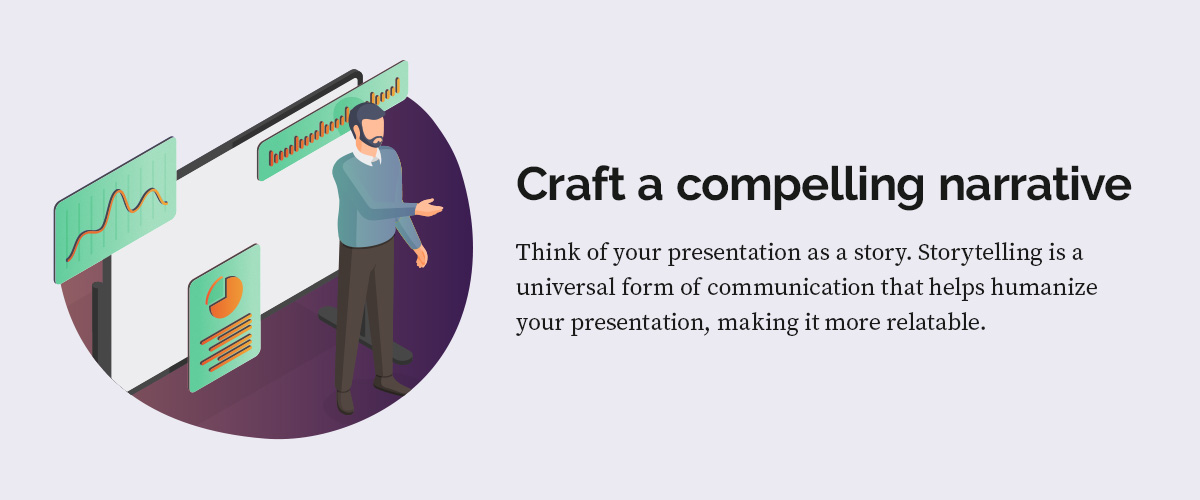
Think of your presentation as a story. It needs a clear beginning, middle, and end structure. The narrative should introduce the audience to the conflict or question you're addressing and provide the listener with closure in the form of a resolution that reinforces your message.
Storytelling is a universal form of communication that helps humanize your presentation, making it more relatable. It automatically tunes your audience in because they want to know what happens next, and it provides the ideal medium to tangibly illustrate concepts. This style can also make you stand out by making your message more memorable. The more information your listeners can recall, the longer your call to action marinades in their minds.
One of the best public speaking tips is to incorporate previews and summaries to guide your audience. Previews inform listeners about what's to come and prepare them for the upcoming discussion. Post-segment summaries and repeating core concepts remind the listener of your key points to carry your narrative thread forward and can help you reframe or refocus the discussion throughout your event.
Tools like audience polling, interactive quizzes, and visual aids with creative multimedia elements all guide listeners through the various segments of your event. Even online presentations come alive with the right virtual backgrounds and strategic use of breakout rooms.
Using technology wisely also makes you more prepared for emergencies. For example, if you're giving your presentation and someone contradicts some of the information you've shared, or a new report emerges with more current numbers, having a plan in place for last-minute changes and technological support allows you to rebound quickly without disrupting the narrative flow.
The question and answer segment is one of the most critical parts of any event, whether it's a sales pitch or a training session. It's your opportunity to maximize presentation engagement and wrap up with a valuable information exchange that earns your audience's respect and demonstrates your deep knowledge of your presentation topic.
Here are some tips to handle this portion of the event like a professional:
A strong grasp of who your audience is and what they need from your event is a powerful first step that forms the foundation you need to deliver an impactful, narrative-driven message. But for that impact to last, you need an equally strategic visual strategy to bring your story to life and drive key concepts home. At Silver Fox Productions, we understand the stakes involved and are here to help you engage your listeners with creative visuals customized to your exact needs, all scalable to your audience and venue size.
Your competitors aren't slowing down, and neither are you. You have ideas worth sharing, and we have the tools and expertise you need to transform them into a lasting impression. Explore our suite of services to get started, or contact a member of our team today.